

Education against the storm: A homage to intellectuals who did not survive their time by surrendering to it
“The task of the intellectual in dark times is not to manage despair but to organize hope without illusions.”—Henry A. Giroux
I first met Henry Giroux forty-six years ago when I was beginning my doctoral studies at the Ontario Institute for Studies in Education in Toronto. The meeting unfolded within one of those academic receptions that feel less like a communion of minds and more like a gilded cage of scrutiny—name tags serving as passports, small talk as coin, and ambition thrumming like a hidden current beneath the delicate ballet of polished self-importance.
Distinguished scholars from the United States arrived trailing reputations like luggage stickers: Ivy League, flagship journals, proper citations of themselves. They clustered, preened, circulated.
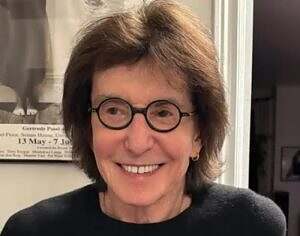
Giroux did something else.
He walked across the room.
He shook my hand.
He listened—not as a performance of politeness, but with the seriousness of someone who knew that attention itself is a form of solidarity. He listened—not out of politeness, but out of genuine interest, the kind that collapses hierarchy and recognizes insight wherever it is struggling to be born.
That small act—simple, unperformative—already told me more about his intellectual character than a shelf of monographs. When I handed him my book, Cries from the Corridor, I felt a twinge of embarrassment. It carried little formal theory. It was a diary, not a manifesto. Five years teaching in a turbulent part of Toronto, written in the raw grammar of exhaustion and hope. No ornate scaffolding of continental philosophy. No ceremonial obeisance to abstraction. Just classrooms thick with rage and laughter, fear and tenderness—children learning to read the world even as the world refused to read them.
Giroux contacted me after finishing the book.
He did not indicate where the theory was missing.
He recognized instead where it was living.
That moment—minor in the official chronologies of academic history—matters more to me now than endless conferences and seminars. It revealed something essential about Giroux’s intellectual temperament. He understood, as did Paulo Freire, that theory which cannot kneel before lived experience is already in the service of domination. He later cited my work in Theory and Resistance in Education, and that quiet recognition—given without fanfare—gave me the courage to ask if he would write the foreword to my dissertation, which British sociologist, Basil Bernstein, had recommended for publication with Routledge.
Giroux was, and remains, one of the most formidable intellectuals of our time: a man endowed with a steel-cast mind, disciplined, unsentimental, intolerant of intellectual fraud. Yet his seriousness was never brittle. It was elastic, grounded, dangerous in the best sense—dangerous to complacency, to cynicism, to the rituals of cowardice that pass for professionalism.
Forged Before the Academy
Long before Giroux entered the university, he learned about power the hard way.
He grew up in Smith Hill, Providence—white working-class terrain where masculinity was forged through confrontation, where dignity had to be defended physically as well as morally. This was not the romanticized grit of memoir but the real thing: streets that taught you how to read bodies, assess threats, and stand your ground.
Giroux was a street fighter. Not by choice, but by necessity.
Tough guys looking for the glory of defeating Giroux with their fists soon learned it was a mistake. He did not posture. He did not back down. He fought with discipline, restraint, and an instinctive understanding of when force was unavoidable and when it was wasteful. Those lessons stayed with him. They later reappeared, sublimated but unmistakable, in his intellectual life.
Giroux never mistook politeness for virtue.
Never confused civility with justice.
Never believed that turning the other cheek meant surrendering the body.
This matters, because Giroux’s later refusal to compromise—to soften his critique for institutional comfort—did not emerge from abstract principle alone. It came from a life that had already taught him that some struggles cannot be avoided, only deferred, and that avoidance carries its own violence.
Basketball scholarships carried him toward higher education. Jazz gave him a language for improvisation, dissent, and freedom under constraint. As a boy shining shoes outside Providence’s legendary Celebrity Club, Giroux absorbed the lesson that culture teaches long before schools do. Inside, jazz bent time toward liberation; outside, police violence enforced its limits. This was his first encounter with what he would later call the pedagogical force of culture—the recognition that culture produces joy and terror, solidarity and fear, resistance and obedience simultaneously.
These were not footnotes to his theory.
They were its bloodstream.
Education as a Site of Struggle
Studying history during the upheavals of the 1960s, Giroux immersed himself in Marx, I. F. Stone, and radical criticism. He learned what polite liberalism refuses to admit: education is never neutral. It is a battlefield where ideology either disguises itself as common sense or is unmasked by critique.
After a master’s degree at Appalachian State, Giroux spent seven years teaching in public high schools. These years hardened his analysis. They stripped away romantic illusions. They taught him that pedagogy is not a metaphor—it is a daily ethical confrontation with inequality, boredom, hope, and despair.
A chance meeting with historian Ted Fenton led him to doctoral study at Carnegie Mellon. By the late 1970s, Giroux entered the university not as a careerist but as an insurgent presence.
And institutions responded accordingly.
The Price of Courage
At Boston University, Giroux published Theory and Resistance in Education (1983), a book that permanently altered the terrain of educational theory. It argued—against functionalism, against technocracy—that education is a site of democratic struggle, not mere social reproduction.
The faculty voted unanimously for tenure.
The university president, John Silber, intervened personally to deny it.
Later, while teaching at Penn State, Giroux carried the banner of critical pedagogy across distant lands, his words stirring the minds of listeners from city squares to shadowed auditoriums, leaving traces of awakening in their wake. Yet Giroux’s salary was frozen for five years.
These were not administrative decisions but reprisals for speaking justice into institutions built to reward silence. These were the institutional costs of refusing to whisper when democracy demanded a voice.
Giroux bore the toll of truth like a knight bearing scars from a battle unseen: careers stalled in shadowed corridors, and the machinery of institutions turning its cold, relentless gears in quiet retaliation.
The lineage is unmistakable.
Even at this late stage in his career, while most of his celebrated peers, such as Donaldo Macedo and Stanley Aronowitz, were awarded a Distinguished University Professorship, Giroux has not been given such an award. This is a shameless as it is regrettable given that he has six honorary doctorates, and is viewed as one of the most important theorists on education and critical pedagogy in the world.
Giroux never learned the art of strategic silence. He never trimmed his critique to fit donor comfort or managerial sensibilities. He insisted that educators are public intellectuals, that pedagogy is a moral and political project, that democracy cannot survive without critical education (Teachers as Intellectuals, 1988).
I came to understand this cost more viscerally when I was placed at the top of UCLA’s so-called “Dirty Thirty” list and later on Charlie Kirk’s Professor Watchlist. After Kirk’s assassination, those marked on his ledger of “dangerous” professors were left exposed, cast like fragile ships upon a storm-tossed sea, at the mercy of a fascist state that moved with the cold precision of a silent predator. In those moments, Giroux’s life clarified something essential: critical pedagogy is not a method—it is a wager on one’s own professional precarity.
I learned to navigate the shadowed ledger of a J. Edgar Hoover, where names were etched in ink that seemed to whisper in the dark, and the machinery of bureaucracy—cold, precise, merciless—spun its wheels with a cruelty designed to hush the heartbeat of dissent. I became a cartographer of these unseen maps, tracing paths through the minefields of paperwork and whispered suspicion, surviving the quiet storms meant to silence. It was like sunlight breaking through a storm-darkened sky when administrators and colleagues became unexpected allies, moving like quiet currents beneath the surface to lift and shield a faculty bent on freedom and illumination.
Collaboration and Solidarity
In 1985, five years after our initial meeting, Henry helped secure my appointment at Miami University of Ohio, in Oxford, a town whose brick facades and manicured lawns concealed a more volatile underside. Oxford was home to the major university fraternities—its social life soaked in beer, bravado, and a mythology of entitlement so thick it would later help inspire the film Animal House. It was not a town especially hospitable to long hair, dissent, or intellectual insurgency. Henry and I learned this quickly.
When we walked down Main Street, our hair marked us before our words ever could. We became moving targets—beer cans hurled from passing cars, laughter trailing behind us like exhaust.
Harassment was not incidental; it was pedagogical. It taught us exactly how fragile academic freedom becomes once it steps outside the classroom and into the public square. We learned to read the town the way one reads a hostile text—alert to tone, threat, and sudden punctuation.
Yet inside the university, something else was taking shape.
Graced with a sympathetic and visionary Dean, we opened our seminars to voices that refused domestication. We invited bell hooks, whose presence alone reoriented the moral geometry of the room. She brought with her a language of love sharpened by critique, a pedagogy that refused the separation of intellect from embodiment, theory from struggle. These were not polite academic conversations. They were acts of collective risk-taking, rehearsals for a different kind of public life.
For eight years, Henry held that line—building, defending, and expanding what would become one of the most important spaces for cultural studies and critical pedagogy in the United States. When he was recruited to teach at Penn State, the move carried both recognition and reprisal, opportunity and constraint, as his career so often did.
I inherited the Center for Cultural Studies for a year after Henry’s departure, feeling acutely the weight of stewardship rather than succession. The Center was never meant to be a monument; it was a living argument, one that demanded care, courage, and constant defense. After that year, I accepted a position at UCLA, carrying with me not an institutional blueprint but a lesson in intellectual fidelity: that building spaces for critical thought is never simply an administrative task—it is an ethical commitment that exposes you, inevitably, to risk.
What Henry taught me during those years was not how to survive the academy, but how to refuse being shaped by its cowardice.
Henry was at the forefront of what would become critical pedagogy, and I was eager to join him in that work. As he moved through the halls of Penn State, we produced books and articles that were designed to be more than scholarship—they were instruments, crafted to pry open the doors of critical consciousness and resistance to social injustice. I absorbed that vision fully, carrying it across oceans like a charged spark. In Hugo Chávez’s Venezuela, the lessons of critical pedagogy shed their paper-bound restraint, joined forces with what is known as ‘popular education’, daring minds to awaken, imagine, and act.
Trumpism and the Pedagogy of Cruelty
Trumpism did not arrive unannounced. It was educated into being.
It is the pedagogy of cruelty stripped of euphemism—ignorance transformed into virtue, brutality repackaged as authenticity, contempt elevated to policy. Under Trump, schools became enemy territory, teachers traitors, history an obstacle to be destroyed.
Giroux had warned us for decades.
Fascism, he insisted, does not always arrive with jackboots. It often comes wrapped in the language of freedom, efficiency, grievance, and “choice.” It colonizes imagination before it captures institutions. It dismantles memory, critical thought, and civic responsibility—the very capacities democracy requires to survive.
Against this, Giroux wrote with the urgency of a man ringing a bell while the building burned. He named neoliberal fascism without apology (American Nightmare, The Burden of Conscience, Assassins of Memory). He exposed the dis-imagination machine, the systematic assault on critical consciousness.
Silence, he reminded us, is not neutrality.
It is collaboration.
And so we end where the lineage begins.
Paulo Freire walks with us still—not as an icon embalmed in citation, but as a restless presence demanding courage. He taught us that love without courage is sentimentality, and courage without love is brutality. He taught us that education is always political, and that the task of the educator is not to adapt to injustice but to make it uninhabitable.
Henry Giroux has carried that teaching forward when it was dangerous, costly, professionally punishing. He did not survive his time by surrendering to it. He survived by fighting—sometimes with fists, later with words, always with integrity.
That is not recklessness.
That is responsibility.
That is not caution.
That is courage.
Giroux is a fearless warrior, unbowed by the years, moving through the world guided by the compass of his courage. His words erupt from him like dragon-fire, scorching complacency, igniting minds, leaving nothing untouched. He strides where others hesitate, a storm of thought and defiance, and every sentence he casts becomes both shield and weapon, carving paths through the rigid walls of silence and fear. He does not speak to comfort the comfortable or to mollify the powerful; his language scorches complacency, lights the dark corridors of forgetfulness, and ignites the imagination of those long trained to believe that survival requires silence.
Ideas bend toward him as if drawn by gravity; he shapes them, tempers them, and then launches them into the world with the force of someone who has spent a lifetime learning that truth is never neutral, never polite, never safe. Whether addressing the militarization of the academy, the disposability of youth, or the slow seductions of neoliberal fascism, Giroux writes, lectures, and teaches as though the world itself depends on it—because, in the most literal sense, it does.

This article is republished, with thanks, from the LA Progressive
References
Giroux, H. A. (1983). Theory and Resistance in Education. South Hadley, MA: Bergin & Garvey.
Giroux, H. A. (1988). Teachers as Intellectuals: Toward a Critical Pedagogy of Learning. Westport, CT: Bergin & Garvey.
Giroux, H. A. (1995). The Abandoned Generation: Democracy Beyond the Culture of Fear. New York: St. Martin’s Press.
Giroux, H. A. (1999). The Mouse That Roared: Disney and the End of Innocence. Lanham, MD: Rowman & Littlefield.
Giroux, H. A. (2000). Stealing Innocence: Corporate Culture’s War on Children. New York: Palgrave.
Giroux, H. A. (2007). The University in Chains: Confronting the Military-Industrial-Academic Complex. Boulder, CO: Paradigm.
Giroux, H. A. (2009). Youth in a Suspect Society: Democracy or Disposability? New York: Palgrave Macmillan.
Giroux, H. A. (2018). American Nightmare: Facing the Challenge of Fascism. San Francisco: City Lights.
Giroux, H. A. (2019). The Burden of Conscience: Educating Beyond the Veil of Ignorance. New York: Bloomsbury.
Giroux, H. A. (2023). Assassins of Memory: Essays on the Invention of a Racist Past. San Francisco: City Lights.
Freire, P. (1970). Pedagogy of the Oppressed. New York: Continuum.
The opinions expressed here are solely the author’s and do not reflect the opinions or beliefs of the LA Progressive.