
Mr. Calandra: Return our trustees
The TDSB needs its trustees back. As you probably remember, they and colleagues from four other school boards, were shown the door at the end of the 2025 school year. They still have no official access to their communities, don’t get paid what little they used to receive and can’t attend meetings: they’ve officially disappeared and don’t know whether the position of trustee will even be an entity across Ontario when the Fall municipal elections are held. These elected representatives are now joined by those from the Peel DSB, taken over yesterday by Education Minister, Paul Calandra, himself.
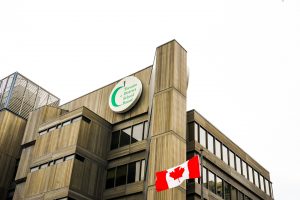 The Dark Tower formally known as the TDSB is run by Ministry of Education (MOE)-appointed Rohit Gupta who issues periodic decisions on its behalf. They affect teachers, families and 235 000 students attending its 579 schools. His decisions arrive with little or no explanation: the approval of the board’s controversial special education plan that raised class size caps for kids with complex needs, the firing of its newly-hired director, Clayton Latouche and ending lottery-based admission to special interest programmes.
There are hardly any public meetings on the monthly Board calendar. Those still running aren’t live-streamed for people to watch. Parents at a recent Special Education Advisory Committee (SEAC) meeting brought their own recording equipment so they could make a record of the proceedings.
But recent events are making it harder for Gupta to keep that little door at the bottom of the Dark Tower closed – things just leak out no matter how hard people try to keep schtum. Here’s a peek inside.
Family Support Offices
Calandra announced in November that all school boards in the province must open “student and family support offices” by September 1 this year to make it easier for families to negotiate complex school systems and get help for their kids. It was received with skepticism, but Calandra went ahead and ordered the boards run by MOE supervisors to open them in January because they didn’t have any trustees for parents to turn to after he dismissed them last June.
School boards have been told to fund them from their own pockets, ironic when the boards under supervision are accused of mismanagement and running near deficits. Superficially the idea looks okay: someone needs to be on the other end of the line when parents are trying to find information- at such a premium in a huge organization like the TDSB, especially under supervision. So, there must be quite a few well-trained, knowledgeable staff members available to help parents through the murk.
There are two.
The student and family support offices are a joke. The two people at the TDSB replace about 4 staff who made up the office of trustee services back when there were trustees, according to TDSB trustee Deborah Williams – itself a reduction in services from years before. She said the office looks like a call centre with a 311 number. It’s just not staffed like one. Another trustee, speaking on background, said that an office like this can’t possibly address the many and complicated issues that go on in schools across the board. So how do parents navigate a system that is becoming increasingly distant from those who it is supposed to serve? Trustee Debbie King told The Trillium: “I continue to hear from families in Parkdale—High Park, particularly Black and other racialized parents, who report persistent barriers, inconsistent responses, and unequal treatment within the system.” What is their recourse?

What about the provincially mandated Parent Concern Protocol? Trustees used to be part of this process for dealing with issues like those above. Parents were directed to the classroom teacher, then to the school principal, then to Family of School superintendents and finally to trustees to get help, make appeals and voice their concerns. Are elected trustees to be replaced by a couple of staff in a call centre?
If Calandra and Gupta imagine that parents are going to buy this cynical move as a replacement for an elected school board with roots in the community, they need to give their heads a shake.
Class size cap
MOE says that grades 4-8 classrooms must have an average class size of no more than 24.5 students. That sounds alright until you look closely at the term average. In one school you could have a class of 40 and another special needs class of 8. The average would be 24 – just below MOE’s average. To avoid the problem of lopsided class sizes, TDSB trustees voted last March to ensure that 90 percent of grade 4-8 classes would have 30 or fewer students and that none of them would have more than 32.
Although there is no record in Gupta’s documents on the TDSB website, Toronto Today reported that the supervisor rescinded this decision. So, grade 4-8 class sizes at TDSB schools can rise to an indeterminate level as long as the average size across the system is 24.5. His only explanation, according to Toronto Today reporter Gabe Oatley, comes from an email sent to a concerned parent in which he explains that the decision is within MOE guidelines and that by increasing class sizes there will be more money to “invest” in classrooms to improve math and literacy. Sounds like the kind of reasoning that might look plausible on a spreadsheet but ridiculous in a real bricks and mortar school.
Given years of cutbacks to supports for special needs kids and increasingly placing them in regular and now larger classes, Gupta must be residing on another planet. Yet, he is not accountable for his decisions.
TDSB posted surplus
Paul Calandra made a big deal about the so-called financial mismanagement in school boards he placed under supervision last year. Price Waterhouse Coopers (PwC) sent to the TDSB to uncover serious mismanagement wasn’t able to do so; the Board presented a balanced budget with a tiny surplus for 2025-26. PwC recommended that the TDSB be placed under supervision because of the “probable accumulated deficit for both the 2024-25 and 2025-26 school years.” Missing from all the discussion about TDSB financial woes is MOE’s responsibility for them. The Ford government has consistently cut funding to education across the province since it came into power. TDSB funding for 2025-26 is down by a total of $898 million since 2019.
 Like other boards the TDSB faces a built-in deficit partly because the Ford government won’t pay for increases in required statutory benefits like Canada Pension Plan (CPP) and Employment Insurance (EI). The Board couldn’t cut costs of operating underused schools by closing some of them because there was a provincial moratorium on that. Yet the government didn’t help cover these costs.
How then, is the TDSB posting a surplus of $30.5 million for 2025?
You can find the surplus on page 6 of the Deloitte Auditor’s Report attached to the Supervisor Decisions from December. Where did this money come from? We can only speculate since there are no minutes posted by the 4-member Audit Committee that met on December 8. Maybe it’s coming through MOE’s increased Core Education Funding (about $243 million). This might have something to do with the Ford government having to pay back lost wages to teachers and other public sector workers after it tried to cap pay increases at 1 percent per year with Bill 124. The bill was ruled unconstitutional by Ontario’s appeal Court in 2024.
We don’t know what’s going on because there are no trustees to ask questions about the many interesting numbers in this auditor’s report. Normally, this would be the time of year Board staff would be explaining the financial situation to trustees. It looks like silence is what Calandra means by solving the Board’s financial mismanagement?
Bowmore Road Jr. and Middle PS
Bowmore Road PS is a big kindergarten to grade 8 school in the upper Beaches. Its 1 050 students are taught by 90 teachers with an active and involved parent council. It is high up on the list of the Learning Opportunities Index (LOI) TDSB’s measure of factors affecting student success. Out of 470 schools on the LOI, Bowmore ranks 415th. Prospects for students to manage well in school are pretty good.
Yet a recent Toronto Today article describes Bowmore as a School ‘in crisis’. What’s going on? Local trustee, Michelle Aarts says the school has a large range of social-economic needs though teachers send out strong messages of social justice. She notes that, since the pandemic, the tone of the school needs work. That might help to explain the recent allegations of someone trashing two classrooms and setting a fire. Aarts told me that the newly-promoted principal, Konstantinos Flegas, was hired with the proviso that he would receive Board support in running such a large complex school. Parents were understandably upset about increasing reports of violent incidents and demanded action at meeting on January 12
What they got was the removal of both the principal and vice-principal whom Aarts contends needed help, not removal. There is no information about what happened to them: were they fired or put on leave? With no trustee to demand answers to those questions, the school community is left hanging. The local superintendent, Anastasia Poulos, announced the change in a terse letter sent a few days later:
January 15, 2026
Dear Parents/Guardians/Caregivers,
I am writing to inform you of a change in administration at Bowmore Road Junior and Senior Public School. As of January 16, 2026, Principal Konstantinos Flegas will no longer be at Bowmore Road Junior and Senior Public School. We thank Principal Flegas for his support and leadership at Bowmore Road Junior and Senior Public School over the past 3 years…
A similar letter about the vice principal was sent to parents the following week.
Then two teachers were fired.

Elementary Teachers of Toronto (ETT) is grieving the firings. No information is available about them, but they don’t come from out of the blue. They might well have something to do with a disagreement between former school administration and staff over the decision to change the middle school routine from a partial rotary to a core model. With partial rotary, home room teachers teach main subjects like Math and English and their students rotate to other teachers for subjects like Science and Social Studies. Under the core model, teachers deal with all subjects. Over objections of teachers and parents, the school community was informed that the Core Model was the one Bowmore was going to adopt.
To do the additional preparation to teach all subjects, teachers suggested they might cut back on volunteering their free time for extra-curricular activities, but backed off when told that this might constitute strike action. As it was, they volunteered free time for as many as 6 extra-curriculars.
Supervisor Gupta is making things clear to the staff and school communities at the TDSB: don’t make waves. At Bowmore, there have been 10 Opportunities to Respond (OTRs) issued to teachers this year; OTR is bureaucratese for notice of possible disciplinary action. In a typical year there might be one or two. The school has lost 4 key staff members at a time when it badly needs stability and responsive administration. Instead, Gupta, through his staff, has indicated how quickly things can go south at a school that raises concerns. Intimidation is the rule.
The broader message is equally hostile. Teachers may be disciplined or fired for not towing the line. Parents have little recourse to Board administration staff who won’t or can’t help them. A respected director of education was fired without explanation. The basic functions of board finances and day-to-day operations are hidden from view somewhere in the Dark Tower. As Michelle Aarts expressed: “The system is neutered.
Post Script
Friends of public education are organizing. The Fund our schools campaign offers a place for parents and educators to explain what is happening in local schools, while pushing for better funding and repairs to crumbling infrastructure. Adopt a Blue Riding enables concerned people to leaflet and talk to parents in Tory ridings about the many shortfalls of this government. Building Better Schools actions detail the cuts made to schools.
All of these are connected to the mighty Toronto and York Region Labour Council. Executive Assistant Jennifer Huang told me about 4 upcoming town hall meetings in Toronto to give community members a chance to help each other understand worries about decreasing school supports and increasing violence in schools. The Labour Council engages with school councils and runs phone zaps to MPPs to keep them apprised of education-related problems. It’s currently operating a well-attended trustee network to help them organize to resist cuts and board takeovers. The above groups are also supported by Elementary Teachers Federation of Ontario, Ontario Secondary School Teachers Federation and Toronto Education Workers 4400.
Another fine reference for friends of public education is the Toronto Education Advocacy Network (TEAN) with connections to many other resources like how to participate in a School Walk-in.
Local organizations broaden their scope to connect with the many other groups across the province that realize authoritarian governments like that of the Tories won’t be stopped without equal countervailing power.